The Sims Four Rogue Trader
8 agosto 2026
A few nights ago, lying half awake in a climate-change-induced delirium state, a thought crossed my mind: The Sims is a CRPG.
I have been playing Warhammer 40K Rogue Trader lately. Leaving my disappointment after finishing Baldur's Gate 3 behind (that's a topic for another blog), I wanted to try something denser, with more mechanics and story to chew on. After several days I haven't even finished the prologue. All that time has been spent on reading through dozens of menus and tutorials and playing a few introductory combat encounters. So far, that's exactly what I wished for. We'll see how I feel about it when the story really gets going, a few dozen hours from now.
Meanwhile, my partner has been playing Disco Elysium. The game picked her interest when I told her that it's a choice-based story with no combat (and, of course, one of the main inspirations for my very own Imago Season). She's one of those people who only really play Mario Kart and The Sims, so I thought that Disco would be a good introduction to the wider experiences the medium can offer. She has been having a blast.
"Huh", I thought in the middle of the night, my brain half-fried from the heat, "Disco Elysium plays a lot like The Sims. You click on characters to interact and on the ground to select a destination and you have a bunch of menus at the bottom of the screen where you can change your clothes. No wonder she has gotten used to the controls so easily". Dreaming of clicking on Kim and making him do a silly dance, I went back to sleep.
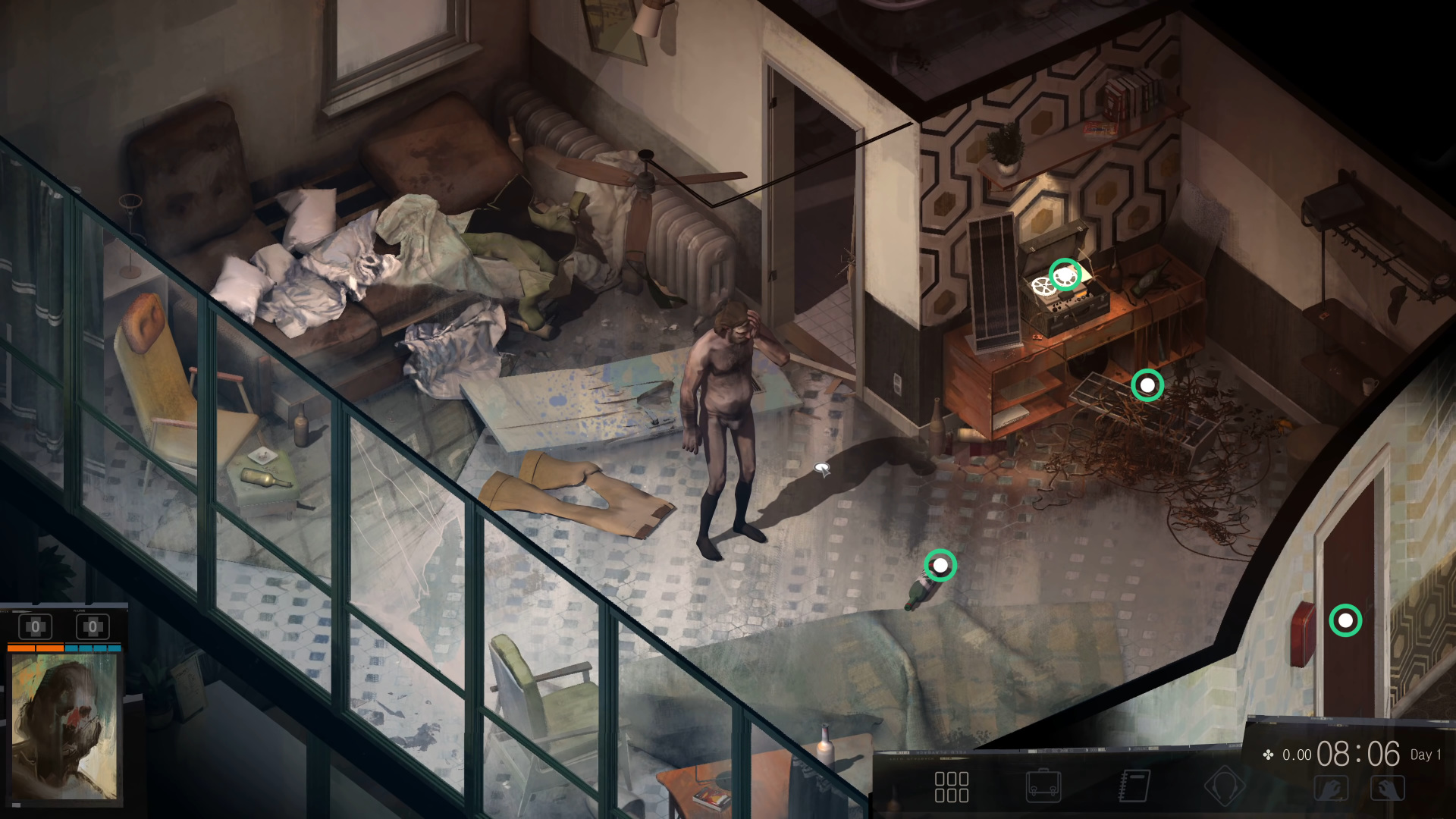
In the morning, I realized how obvious my nocturnal thought had been. Of course DE has a control scheme just like the one in The Sims. They both draw from the isometric CRPGs of the 90s and the 2000s. Disco, due to the nostalgia of its creators for Baldur's Gate, Planescape Torment and their relatives. The Sims, necessarily for the context it was released in. If you are making a party-based game in the year 2000 (and a Sims household is basically a videogame party), where are you looking for inspiration?
You have the character portraits at the bottom. You have the skills and the level ups. You have the real-time-with-pause gameplay (we joke about how I micromanage my characters in Paralives, constantly pausing the game so I don't waste a second of their precious, short lives). You have the environmental interactions and the character customization and the magic/supernatural stuff and the companion relationship systems and the little popups delivering narrative and you have...
The Sims is a full-on classic computer roleplaying game. Instead of dragons, goblins and the incarnation of Death you just fight the job market, taxes and... the incarnation of Death.

I never made this obvious connection because games like Rogue Trader are for real fantasy nerds while The Sims is for casuals and (shudder) girls. It is hard to get the hardcore/casual divide out of your head, even as someone who treads the line constantly. The games industry doesn't seem like it wants to reach out to the wider audience, either.
With videogames disappearing from public spaces (no physical discs means no videogames aisle at the mall) and even the biggest game marketing efforts moving from TV and traditional advertisement to closed platforms1, it increasingly feels that gaming is becoming a niche interest for an aging audience. Either you are already into games, or you are forever relegated to mobile slop and gacha.
I believe that many, many people would enjoy videogames were it not for the high barrier of entry, both economical and social. If you approach videogames as an outsider and your options are either buying a thousand-dollar console for "Bombing the Middle East Simulator 2026" or downloading a >30 gigabyte gambling-softcore porn Chinese game to your phone, it's logical that most people will stay away.
Indie games (even "indie" games with millions of dollars in marketing behind them), for all the attention they have been getting, haven't been able to break through this barrier, either. Friends, relatives and everyone outside of gaming circles that I have tried to explain Imago Season to have been absolutely flabbergasted that someone would pay for a game where you are not killing stuff 24/7. The general public's conception of videogames is stuck in 2004.
Except... The Sims 2 was released in 2004. It went on to become a social phenomenon. The Sims 4 has reached 85 million people! Let me repeat this once more: one of the most popular games of all time is a simulation-focused, party-based computer roleplaying game. The general audience is ready for dense, interaction-rich experiences.
But The Sims doesn't register in most people's heads as a real game for some reason. Real games are about rude men that are sad about their dead wives (or rude women who are sad about their dead father figures) and go an a killing rampage as a result. And even those are becoming niche, as I said.
To me, it is a real shame that gaming has become such an entrenched identity. People outside of it have no path to discover the diversity of the medium. People inside of it have grown too attached to labels, arguing about their favourite AAA not-dark-souls all while decrying that there is no innovation anymore. There are big barriers to discovering things outside of your comfort zone, both industry-made and self-imposed.
I know that many people who don't currently play videogames would find something to really enjoy if given the chance. I don't know what the solution to the discoverability problem looks like, but getting rid of physical games and charging a grand for the chance to get into the medium is not it.
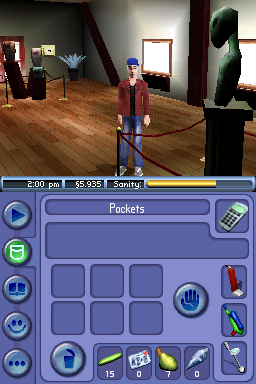
Maybe we should all go back to playing The Sims 2 on the Nintendo DS.
1 I keep going back and forth on this point. GTA Six feels less like a concrete work/product and more like a kind of "event", like an Avengers or a James Cameron movie. It will undoubtedly get new people into playing videogames, by sheer volume of its marketing machine. But I wonder if people paying a hundred dollars for a game about shooting sex workers actually does anything for the medium. It kind of reinforces my feeling that most people don't even know that other kind of games exist. This doesn't seem to me like a Wii Sports situation, where people outside of gaming circles actually began playing videogames.